ByJohn A
How Computer Vision Works
Computer vision begins with light, captured by sensors that convert photons into electrical signals and form a pixel grid. The process proceeds through calibration, noise suppression, and lighting normalization to stabilize measurements. Feature extraction identifies edges, textures, and motifs, while representation learning builds compact encodings. Modern approaches lean toward end-to-end learning, seeking invariants and temporal patterns. The result is a capable yet imperfect system, whose limits and implications invite careful scrutiny as approaches shift and new data challenges emerge.
How Computer Vision Gets Its Start: From Light to Pixels
Light is the raw material of computer vision, but it is only the starting point. In this initial stage, photons become sensor signals, forming a raster of intensity and spectral cues. The process interrogates scene structure, accounting for edge artifacts and noise. Color calibration aligns captured data with perceptual truth, enabling robust downstream interpretation without presupposed outcomes.
See also: nomadexa
How Machines Learn to See: Feature Extraction and Representation
In moving from calibrated sensor signals to meaningful interpretation, machines learn to see by extracting features that encode salient structure and patterns in data. Feature extraction identifies edges, textures, and motifs, forming compact representations.
Representation learning extends this by discovering abstract, task-relevant encodings that enable efficient generalization. The process emphasizes principled evaluation, reproducibility, and a disciplined search for robust, transferable descriptors.
From Features to Understanding: Neural Networks and End-to-End Learning
The approach foregrounds intrinsic invariants and temporal textures, enabling flexible generalization while exposing experimental vulnerabilities and opportunities for principled architectural design and empirical validation.
Real-World Powers and Pitfalls: Applications, Challenges, and Trends
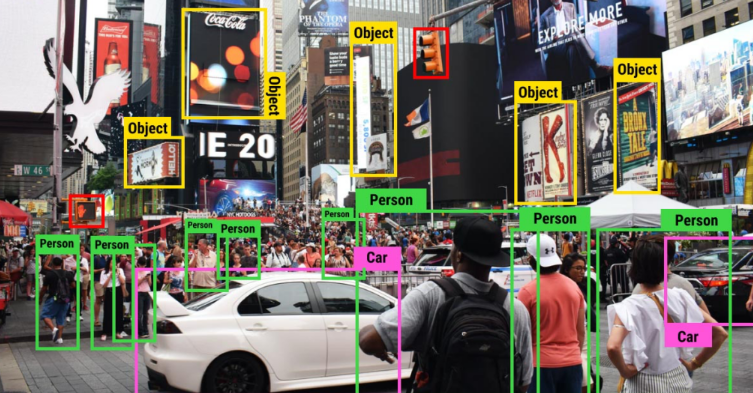
Real-world deployments of computer vision systems reveal a landscape of powerful capabilities and notable cautions. This analysis surveys real world applications, highlighting tangible benefits while identifying deployment challenges. Data pitfalls, including bias and labeling gaps, can skew outcomes. Trend analysis shows accelerating adoption across domains, yet scalable validation remains essential. A rigorous, experimental frame clarifies risks, opportunities, and responsible progression for freedom-loving practitioners.
Frequently Asked Questions
How Do Cameras Influence Computer Vision Beyond Raw Pixels?
Cameras influence computer vision through color calibration and sensor fusion, enabling consistent color perception and integrated signal interpretation across modalities; this rigorous, experimental perspective reveals how hardware choices shape abstractions, robustness, and generalization for a freedom-seeking audience.
Can CV Systems Think Like Humans or Still Only Detect Patterns?
Anachronism: a neural net “Orwellian oracle” attempts thinking vs recognizing; nonetheless CV systems still rely on pattern recognition, not human-like symbolic reasoning or sentient deliberation, though experiments probe symbolic reasoning in constrained, freedom-loving frameworks.
What Ethical Considerations Govern Large-Scale Vision Datasets?
Ethical considerations include privacy governance and consent challenges, with stakeholders balancing innovation against rights. The analysis emphasizes transparent data provenance, stakeholder oversight, and risk assessment, while acknowledging freedom-oriented discourse that critiques surveillance potentials and promotes accountable, voluntary participation.
How Do Vision Models Handle Unseen or Adversarial Inputs?
Unseen inputs challenge vision models, demanding robust generalization and detection of anomalies; adversarial robustness measures resilience to carefully crafted perturbations. The approach combines calibration, redundancy, preprocessing defenses, and empirical evaluation to assess reliability under novel conditions.
What Are the Limits of Real-Time Computer Vision in Edge Devices?
Real-time limits on edge devices hinge on energy constraints and processing latency; efficiency is governed by model size, hardware specialization, and data throughput. Experiments reveal a trade-off between accuracy, real-time latency, and sustained performance under strict energy constraints.
Conclusion
Computer vision progresses through a disciplined chain: from calibrated light capture to stable pixel representations, then to discerning features and compact encodings. Modern systems increasingly rely on end-to-end learning, where neural networks jointly optimize perception and interpretation. An illustrative statistic underscores progress: end-to-end models now approach human-like robustness on certain benchmarks, with some datasets showing accuracy gaps under 5% for controlled tasks. This convergence reveals both the power and limits of data-driven perception, demanding careful evaluation and responsible deployment.