ByJohn A
How Public and Private Keys Work
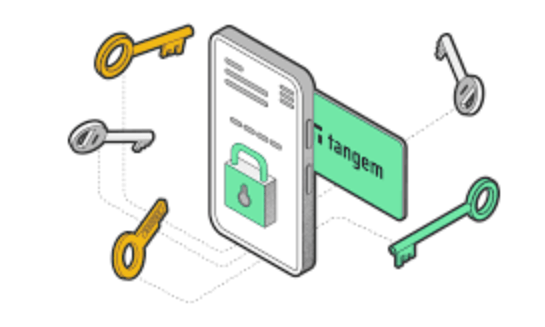
Public and private keys enable asymmetric operations that separate encryption and identity proof from access control. A public key can be shared to encrypt data or verify a signature, while the private key remains protected to decrypt or sign. Key pairs bind identity to a cryptographic function, supporting integrity, authenticity, and non-repudiation. Effective generation, storage, and lifecycle controls are essential to maintain confidentiality and trust. The implications of mismanagement are real, and the next steps reveal how safeguards are implemented in practice.
Understand Public and Private Keys
Public and private keys are a foundational pair in asymmetric cryptography: a public key can be shared openly to enable others to encrypt messages or verify signatures, while the private key must remain confidential to decrypt or create signatures.
The conceptual foundations underpin cryptographic principles, balancing accessibility with secrecy, ensuring integrity, authenticity, and non-repudiation while preserving user autonomy and security.
Generate Modern Key Pairs
Generating modern key pairs involves selecting cryptographic algorithms that balance security strength with performance, then producing pairs through standardized, auditable processes. The process emphasizes the key lifecycle, from generation to retirement, under rigorous threat modeling. A detached analysis notes deterministic parameter selection, secure entropy input, and provenance recording, ensuring auditable traceability while maintaining resilience against evolving attack surfaces and implementation flaws.
Store, Rotate, and Use Keys Securely
Secure key storage, rotation, and usage form a critical trio in modern cryptographic practice, ensuring that keys remain confidential, available, and auditable throughout their lifecycle. The approach emphasizes secure storage, robust access controls, and tamper-evident logs. Key rotation mitigates drift and exposure, while disciplined usage ensures cryptographic operations preserve integrity, confidentiality, and freedom from compromise across systems and teams.
See also: How Computer Vision Works
Walkthrough: Signing, Encryption, and Verification
In this walkthrough, the processes of signing, encryption, and verification are examined as a cohesive sequence that ensures data authenticity, confidentiality, and integrity.
The analysis isolates signing workflows, highlighting practical steps and safeguards.
It also identifies verification pitfalls that commonly undermine trust, urging rigorous validation, robust key management, and clear provenance to sustain freedom without compromising security or accountability.
Conclusion
In the final tally, public and private keys behave like the ultimate, bureaucratic gatekeepers: publicly declare welcome, privately maintain the door. The system’s integrity rests on rigid generation, disciplined storage, and disciplined rotation, not on wishful thinking. When signing, encryption, and verification are executed with precision, trust is preserved; when mishandled, the entire artifact collapses into a comedy of errors. Satire aside, sound key management remains the sober backbone of secure communications and verifiable identities.